


The Most Valuable Business Conversations May Start Before the Event
There is a familiar challenge with attending a major industry event. You arrive with good intentions. There are dozens of interesting sessions, hundreds of companies to discover and plenty of people worth meeting. Two days later, you leave with a collection of business cards, a few promising conversations and the feeling that you probably missed something important.
The problem isn't a lack of opportunity. It's knowing which opportunities deserve your attention.
For business leaders navigating artificial intelligence, digital transformation and increasingly complex technology decisions, time has become one of the most valuable resources. And the traditional approach to attending industry events turning up, exploring and hoping to meet the right people is no longer enough.
The question is shifting from "What can I see at this event?" to "What can I actually achieve by attending?"
From Networking By Chance To Networking With Purpose
Networking has always been one of the strongest reasons to attend a business event. But there's a significant difference between meeting people and meeting the right people.
A conversation with someone facing a similar business challenge can be more valuable than collecting dozens of contacts. A discussion with a potential technology partner might help resolve an issue that has been holding back a project for months.
And sometimes, the most useful connection is someone you would never have thought to approach.
This is where digital event platforms are beginning to change the experience.
Rather than treating networking as something that happens between conference sessions, technology can help attendees identify relevant contacts, explore potential partnerships and arrange conversations before arriving.
At Tech Show Paris 2026, for example, the forthcoming Connect at Tech Show Paris platform is designed to help registered visitors explore exhibitors, discover solutions, schedule meetings and build personalised agendas ahead of the event.
Visitors will be able to identify exhibitors relevant to their projects, select conference sessions and plan their time around the conversations and insights that matter most to them.
It's a relatively simple idea, but one with broader implications.
The value of an event shouldn't depend entirely on who you happen to meet. It should also come from the connections you deliberately create.
And for organisations investing time and resources in attending, that makes the potential return much easier to define.
Information Is Everywhere. Experience Is Harder To Replicate.
There's another reason the role of industry events is changing.
Access to information is no longer the problem.
Business leaders can watch presentations online, read expert analysis, explore product demonstrations and increasingly use Al to research unfamiliar technologies.
What remains harder to replicate digitally is the experience of seeing different solutions work together, questioning the people behind them and understanding how technology behaves under real-world conditions.
Consider the infrastructure supporting today's digital economy.
Data centres are essential to Al, cloud computing and the digital services businesses depend on. Yet understanding their operational challenges through a presentation is very different from experiencing how multiple systems respond when something goes wrong.
What happens when a data centre loses power? How quickly can teams identify a cooling failure? What technologies need to work together to prevent a localised incident from becoming a major operational disruption?
These aren't hypothetical concerns for the organisations responsible for critical infrastructure.
At Data Centre World Paris this November, the new Data Centre Immersive Hub will bring these challenges to life through realistic scenarios inspired by incidents faced by data centre operators.
Visitors will be able to explore situations involving power failures, water leaks, cooling disruptions and predictive maintenance, discovering how different technologies contribute to operational continuity and resilience.
The objective goes beyond demonstrating individual products. It is about understanding how solutions interact when the stakes are high.
This approach reflects a wider shift in how businesses evaluate innovation.
A technology might look impressive in isolation. Its real value becomes clearer when people can understand how it performs within a larger operational environment.
For decision-makers, that practical context can be far more useful than another product presentation.
Why Smaller Conversations Can Lead To Bigger Decisions
Large conferences play an important role in exposing audiences to new ideas.
They bring together different perspectives, challenge established thinking and help professionals understand where their industries are heading.
But some of the most valuable conversations happen away from the main stage.
They happen when someone asks a question they might hesitate to raise in front of hundreds of people.
When a technology leader admits that an Al implementation hasn't delivered the expected results.
Or when two executives discover that they are struggling with the same organisational challenge, despite working in completely different sectors.
These exchanges matter because technology decisions are rarely straightforward.
Should organisations prioritise speed or control when deploying Al? How much dependence on a cloud provider is acceptable? Who should be accountable when an automated system makes the wrong decision?
There are no universally correct answers.
Often, what leaders need isn't another expert telling them what to do. It's an opportunity to compare experiences with people who understand the complexity of the decision.
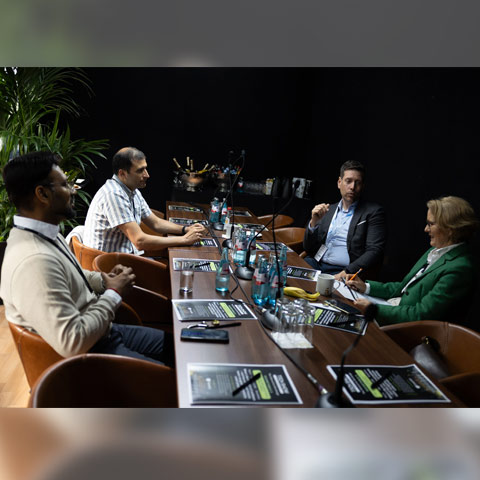
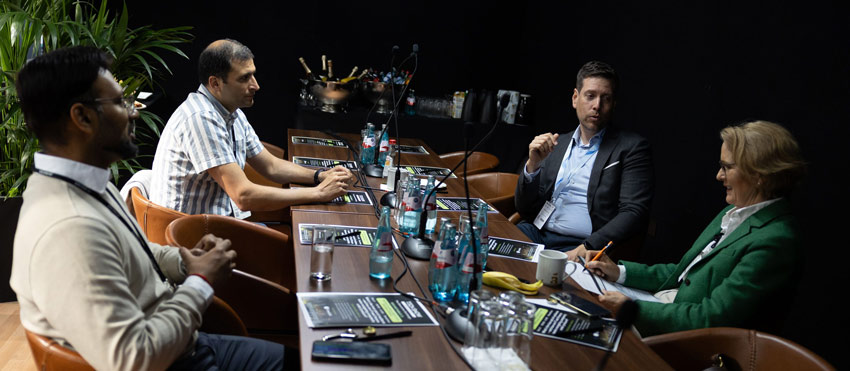
This is the thinking behind the new Executive Club at Tech Show Paris 2026.
Reserved for eligible VIP badge holders, the space will host smaller peer-to-peer discussions, with some conversations supported by facilitators.
Topics include Al governance, cloud dependency, cybersecurity resilience, the challenges of moving Al from pilot to production and the growing pressure of infrastructure costs.
The emphasis is on exchanging practical experiences rather than simply listening to presentations.
For senior decision-makers, these discussions can offer something increasingly valuable: the opportunity to test their thinking against the experiences of others.
Because sometimes the most useful insight isn't a new technology.
It's discovering how another organisation approached a problem you're currently trying to solve.
The Real Opportunity Lies Between Disciplines
Perhaps the biggest challenge facing businesses today is that technological decisions are becoming increasingly interconnected.
Al strategy cannot be separated entirely from data governance. Cloud decisions influence cost, security and scalability. Cybersecurity affects customer trust and operational resilience. Infrastructure capacity can determine how quickly digital ambitions become reality.
Yet organisations often approach these subjects through separate departments, budgets and decision-making processes.
This creates a disconnect between the people defining business ambitions and those responsible for delivering them.
Industry events have an opportunity to help bridge that gap.
The 10th anniversary edition of Tech Show Paris, taking place on 18-19 November 2026, brings together five complementary technology communities: Cloud & Al Infrastructure, DevOps Live, Cloud & Cyber Security Expo, Data & Al Leaders Summit and Data Centre World Paris.
Across the conference programme, discussions will examine questions that extend well beyond individual technologies.
Why do so many Al projects struggle to reach production? Where should organisations run increasingly demanding Al workloads? Can cybersecurity teams keep pace with Al-powered threats? And how should businesses balance innovation with rising infrastructure costs and regulatory expectations?
These are questions with implications for the entire organisation, not just the IT department.
For marketing, ecommerce and customer experience leaders, the answers can influence everything from personalisation and digital performance to customer trust and the economics of delivering Al-powered services.
Bringing different technology communities together creates opportunities for conversations that might otherwise never happen.
And that cross-disciplinary exchange is becoming increasingly important as businesses try to turn technological investment into measurable results.
The Future Of Events Is About What Happens Next
The success of a business event has traditionally been measured through attendance, engagement and the number of contacts generated.
Those metrics still have a role to play.
But from an attendee's perspective, the more meaningful questions come afterwards.
Did the event help clarify an important decision?
Did a conversation lead to a new partnership?
Did a practical demonstration challenge an assumption?
Did an unexpected connection open the door to a different approach?
These outcomes are harder to capture in a simple attendance report, but they are often where the greatest value lies.
Digital platforms can help people prepare more intentionally. Immersive experiences can make complex technologies easier to understand. Smaller discussions can create space for more candid exchanges.
None of these replaces the human element that makes live events valuable.
If anything, they make it more important.
Because the real purpose of bringing professionals together isn't simply to put people in the same room.
It's to create the conditions for the right conversations to happen and for those conversations to lead somewhere.
Discover how technology leaders are turning ideas into action at the 10th anniversary edition of Tech Show Paris, 18-19 November 2026, Paris Expo Porte de Versailles.
Explore the conference programme, discover the event's new experiences and make the most of your visit.
Discover Tech Show Paris 2026 and reserve your badge
Want more like this?
Want more like this?
Insight delivered to your inbox
Keep up to date with our free email. Hand picked whitepapers and posts from our blog, as well as exclusive videos and webinar invitations keep our Users one step ahead.
By clicking 'SIGN UP', you agree to our Terms of Use and Privacy Policy


By clicking 'SIGN UP', you agree to our Terms of Use and Privacy Policy
Other content you may be interested in



Want more like this?
Want more like this?
Insight delivered to your inbox
Keep up to date with our free email. Hand picked whitepapers and posts from our blog, as well as exclusive videos and webinar invitations keep our Users one step ahead.
By clicking 'SIGN UP', you agree to our Terms of Use and Privacy Policy
Brought to you by
